
Personalized Introduction
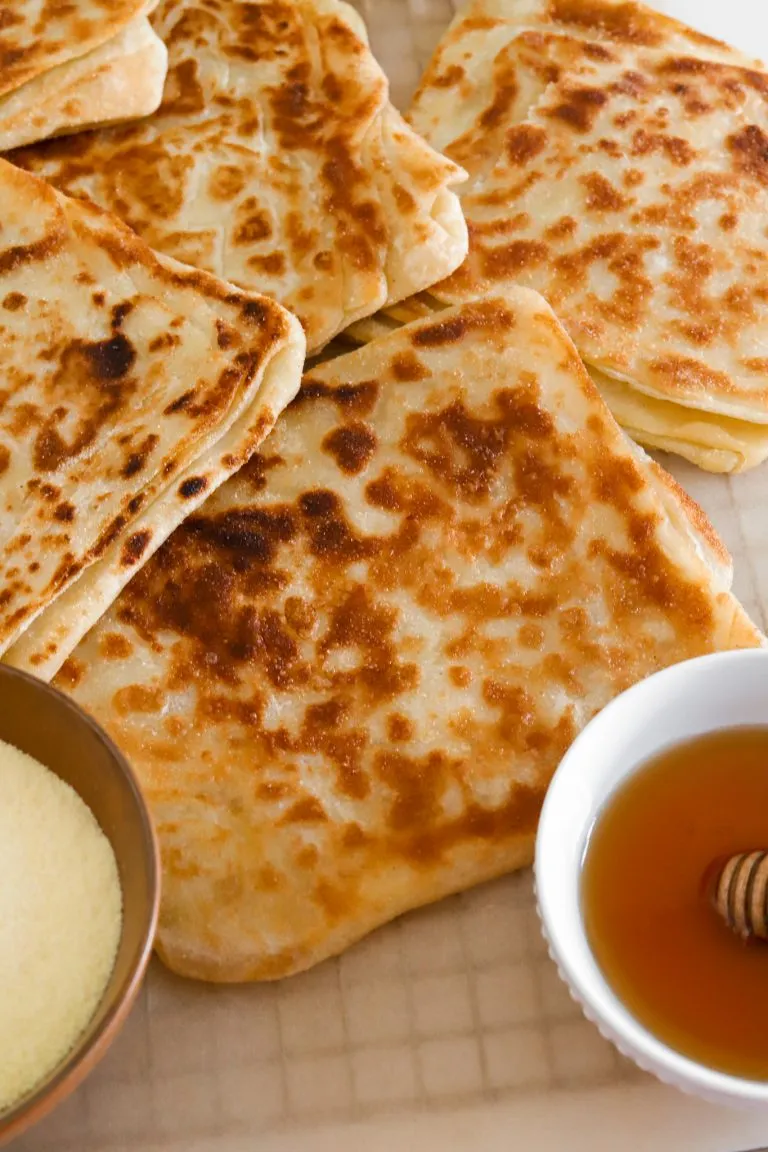
If there’s one recipe that instantly brings me back home, it’s Moroccan Msemen. This flaky, folded, pan-fried Moroccan flatbread is more than just food—it’s a warm memory of mornings filled with mint tea, laughter, and the sound of sizzling dough on a hot pan. Every Moroccan household knows this ritual. The smell alone is enough to make you smile.
I remember helping shape msemen as a kid. My fingers were always clumsy with the dough, and I made squares that were more like odd rectangles… but honestly, no one cared. The magic of msemen is in the hands-on process—stretching the dough until paper-thin, folding it with a drizzle of oil and semolina, and watching it puff and crisp in the pan. And when served warm with honey and butter? Heaven.
Today, I want to take you into that cozy kitchen moment. Whether you’re making msemen for the first time or reconnecting with a childhood favorite, this recipe will fill your home with the warmth and charm of Moroccan mornings.
Recipe Origin & Story
Msemen (also spelled “msimen” or “msemmen”) is a beloved Moroccan flatbread traditionally enjoyed at breakfast or tea time. It’s part of Moroccan street-food culture and almost always found in homes, markets, and roadside cafés. It’s close cousins with meloui (round, coiled versions) and rghaif (sometimes stuffed).
What makes msemen special is its beautiful thin layers—achieved by stretching, folding, and cooking with a mix of oil and semolina. You’ll often see it served with honey-butter, amlou, cheese, eggs, or simply dipped into mint tea. My family used to make msemen in batches, stacking them high and keeping them warm in a kitchen towel. The sound of the pan sizzling with each new square became part of the morning soundtrack.
Ingredient Spotlight
- Main Star:
The dough—simple ingredients (flour, semolina, salt, water), but the technique is where the magic happens. The semolina gives msemen its signature texture: crispy outside, soft and layered inside. - Secret Boost:
A mix of oil + butter brushed between the folds makes the layers flaky and rich. Some families use only oil, but butter brings an extra depth of flavor. - Quality Tips:
Use fine semolina (called “smida na3ma”). Knead the dough long enough for elasticity. The more hydrated the dough is, the easier it stretches into that thin, silky sheet.
Nutritional Benefits
Msemen may be a comfort food, but it brings a few benefits too. Semolina contains protein and slow-digesting carbohydrates, giving you steady energy. If served with honey, you get natural antioxidants. And pairing msemen with olive oil provides healthy fats that support heart health.
Plus, making msemen from scratch allows you to choose the oils and ingredients that feel best for you.
Adaptable Variations
- Dietary Swaps:
– Use whole-wheat flour for more fiber.
– Replace butter with olive oil for a dairy-free version.
– Use gluten-free flour mix (though the texture will be different). - Flavor Twists:
Add a pinch of anise, sesame seeds, or even a touch of honey dough. For savory msemen, add herbs, cheese, or caramelized onions inside the folds. - Seasonal Spins:
Serve msemen warm with amlou in winter, or with fresh jams and honey in summer.
Cooking Science Explained
Msemen looks complicated, but it follows simple, beautiful food science:
1. Kneading develops gluten.
This elasticity makes it possible to stretch the dough into a thin, transparent sheet without tearing.
2. Oil + semolina + folding create layers.
Every fold traps air and fat, making the msemen flaky once cooked.
3. High heat crisps the outside.
A hot pan “shocks” the dough, creating that golden, crunchy surface while keeping the inside soft.
Easy, Step-by-Step Recipe
Ingredients
- 3 cups all-purpose flour
- 1 cup fine semolina (plus extra for folding)
- 1 teaspoon salt
- 2–3 cups warm water (as needed)
- 1/2 cup vegetable oil (for shaping and cooking)
- 2 tablespoons melted butter (optional, for richer layers)
- Honey & butter for serving
Instructions
- Make the dough:
Mix flour, semolina, and salt in a bowl. Slowly add warm water while mixing until a soft, smooth dough forms. Knead for 8–10 minutes until elastic. - Divide into balls:
Coat your hands with oil and divide the dough into small balls (golf-ball size). Cover and rest for 15 minutes. - Flatten and stretch:
On an oiled surface, take one dough ball and gently press it out with your hands. Stretch it until paper-thin—almost transparent. - Add layers:
Drizzle a little oil and sprinkle semolina over the stretched dough. Fold the dough into a square: fold one side to the center, then the opposite side, then fold top and bottom to form a square. - Flatten lightly:
Set aside and repeat with the remaining dough balls. After shaping a few squares, press each lightly to flatten. - Cook:
Heat a lightly oiled pan over medium heat. Cook each msemen 2–3 minutes per side until golden and crisp, gently pressing with a spatula as it cooks. - Serve warm:
Drizzle with honey, spread with butter, or enjoy with cheese, jam, or mint tea.
Practical & Valuable Tips
- Storage:
Keep cooked msemen wrapped in a clean towel for softness. Refrigerate leftovers up to 3 days. Reheat in a pan or toaster. - Serving Ideas:
Serve with honey-butter, amlou, cream cheese, fried eggs, or simply mint tea. - Substitutions:
Swap semolina with cornmeal in emergencies (texture will differ). Use olive oil instead of butter for a lighter version.
Make-Ahead & Batch-Cooking
Msemen freezes beautifully. Shape and fold the squares, freeze them raw on a tray, then store in freezer bags. Cook directly from frozen on a hot pan. You can also cook a large batch ahead of time and freeze them once cooled.
Eco-Friendly Kitchen Hacks
- Use leftover msemen as a base for sandwiches or wraps.
- Reuse excess oil for the next batch.
- Turn stale msemen into sweet or savory breadcrumbs.
Pairing Suggestions
- Beverages:
Traditional Moroccan mint tea, spiced chai, or Arabic coffee. - Sides & Sauces:
Honey, amlou, olive oil, cheese wedges, boiled eggs, or harissa for a spicy twist.
Frequently Asked Questions
- Why is my msemen tough?
The dough may need more kneading or more water. A soft dough is key. - Why does my dough tear when stretching?
It didn’t rest long enough. Resting relaxes the gluten. - Why isn’t it getting crispy?
Increase heat slightly or add a touch more oil during cooking. - Can I bake msemen instead of frying?
It’s possible, but the result won’t have the classic flaky texture.
Call to Action
Try making Moroccan Msemen the next time you want a warm, comforting breakfast or snack with authentic Moroccan flavor. The process is relaxing, the results are delicious, and the experience is pure Moroccan hospitality right in your kitchen.
Bonus: Your Kitchen Notes
Use this space to jot down your folding technique, favorite toppings, or family tips. With every batch, your msemen will get better and better.