
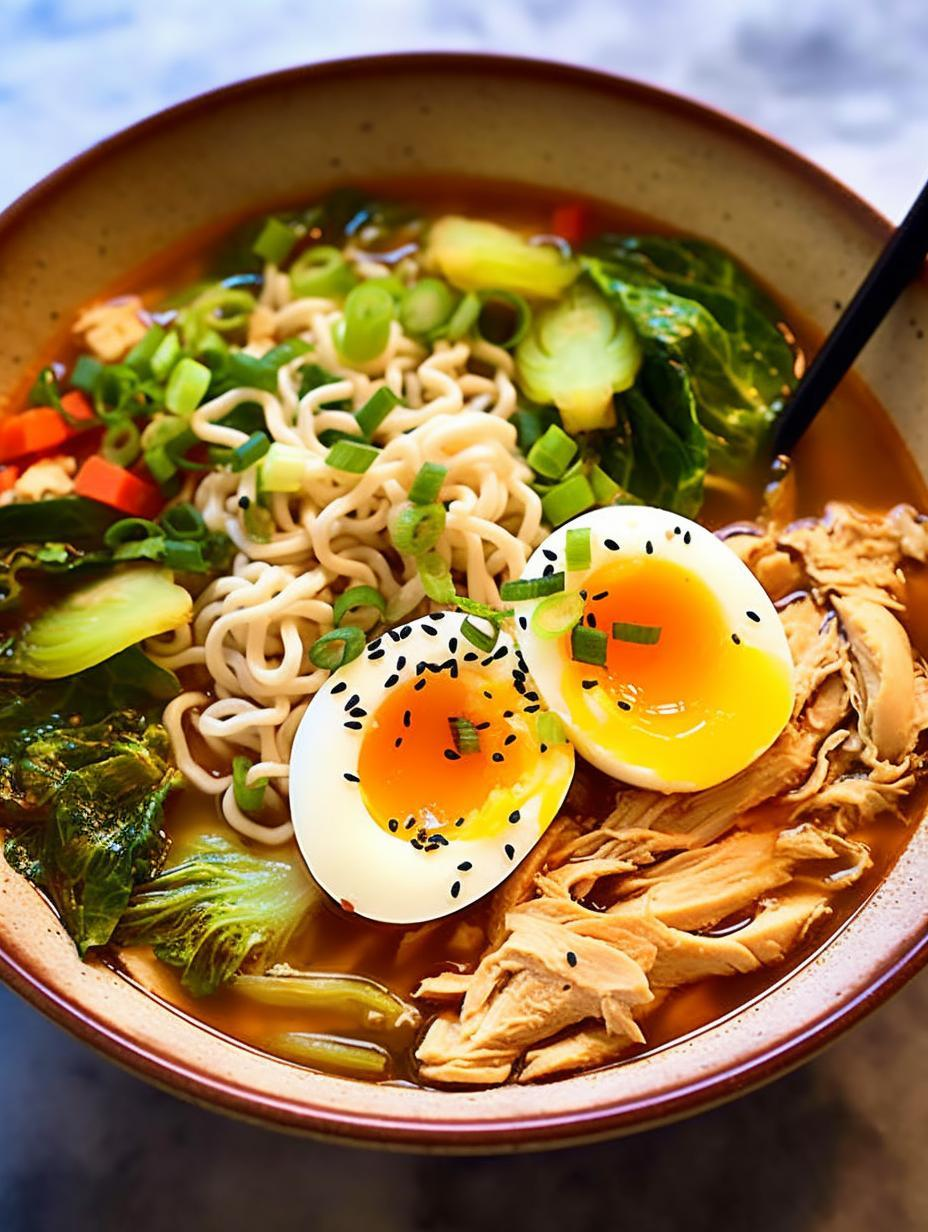
Personalized Introduction
Have you ever had one of those evenings when you want a warm, comforting bowl of noodles, but the idea of making an elaborate dinner sounds exhausting? That is exactly when I reach for this Savory Rotisserie Chicken Ramen. It is quick, cozy, packed with flavor, and one of the easiest ways I know to turn leftover or store-bought rotisserie chicken into a dinner that feels completely new.
What I love most about this ramen is the broth. Instead of relying only on the seasoning packet that comes with instant noodles, I build a simple savory broth with garlic, ginger, soy sauce, sesame oil, and chicken broth. The result is rich, fragrant, and much more satisfying.
Then comes the fun part: the toppings. Tender shredded chicken, soft-boiled eggs, green onions, mushrooms, spinach, corn, or whatever vegetables you have in the refrigerator can all find a home in this bowl.
This is the kind of recipe I make when I want comfort food without spending hours in the kitchen. It is simple enough for a busy weeknight but flavorful enough to make you feel like you are treating yourself to something special.
Recipe Origin & Story
Ramen has become one of the world’s favorite comfort foods, with countless regional styles and variations. While traditional ramen can involve carefully prepared broths and homemade noodles, home cooks can create delicious ramen-inspired bowls with much simpler ingredients.
This rotisserie chicken version is all about convenience. A cooked chicken from the grocery store does most of the work, while a handful of pantry staples transforms ordinary noodles into a deeply savory meal.
I love recipes like this because they are practical. You do not need to wait hours for a stock to simmer. You can build plenty of flavor in a short time by combining aromatics, broth, soy sauce, and a few finishing ingredients.
It is also a fantastic leftover recipe. If you have chicken from yesterday’s dinner, simply shred it and give it a completely different personality with a warm bowl of ramen.
Ingredient Spotlight
- Main Star: Rotisserie chicken is the shortcut that makes this recipe so easy. The meat is already cooked, seasoned, and tender, so you only need to shred it and warm it in the broth.
- Secret Boost: A small amount of toasted sesame oil at the end adds a wonderfully nutty aroma. Because sesame oil is powerful, a little goes a long way.
- Quality Tips: Choose a rotisserie chicken with plenty of meat and remove the skin if you prefer a lighter bowl. Fresh garlic and ginger provide much more flavor than dried versions, while low-sodium chicken broth gives you better control over the salt.
Nutritional Benefits
Rotisserie chicken provides a convenient source of protein, making this ramen more filling than noodles alone. Eggs can provide additional protein along with several important nutrients.
Adding vegetables such as spinach, mushrooms, bok choy, carrots, or broccoli gives the bowl more fiber, vitamins, minerals, and color.
If you want to make the ramen lighter, use less noodles and increase the amount of chicken and vegetables. You can also choose low-sodium broth and soy sauce to reduce the overall saltiness.
Adaptable Variations
- Dietary Swaps: Use gluten-free ramen noodles and gluten-free tamari instead of regular soy sauce. For a lower-carb version, replace some or all of the noodles with shirataki noodles or extra vegetables.
- Flavor Twists: Add chili crisp, sriracha, miso paste, lime juice, cilantro, nori, sesame seeds, or a spoonful of peanut butter for a richer variation.
- Seasonal Spins: Use corn and fresh spinach in summer, mushrooms and bok choy in cooler months, or shredded cabbage, carrots, and snow peas whenever they are available.
Cooking Science Explained
The secret to flavorful quick ramen is building the broth in layers. Garlic and ginger release aromatic oils when gently cooked, creating a much deeper flavor than simply adding them to plain broth.
Another useful trick is adding soy sauce gradually. Soy sauce contains a lot of salt and umami, so adding it a little at a time lets you control the final flavor instead of accidentally making the broth too salty.
Finally, cook the noodles just until tender. Overcooked ramen noodles absorb too much broth and become soft very quickly. If you expect leftovers, it is especially helpful to keep the noodles separate from the broth until serving.
Easy, Step-by-Step Recipe
Ingredients
- 2 packages ramen noodles, seasoning packets discarded
- 3 cups low-sodium chicken broth
- 1 cup water
- 2 cups shredded rotisserie chicken
- 3 garlic cloves, minced
- 1 tablespoon fresh ginger, grated
- 2 tablespoons low-sodium soy sauce
- 1 tablespoon toasted sesame oil, divided
- 1 teaspoon honey
- 1 teaspoon rice vinegar
- 1 cup sliced mushrooms
- 1 cup baby spinach or bok choy
- 2 green onions, thinly sliced
- 2 large eggs
- 1/2 cup corn, optional
- 1/2 teaspoon red pepper flakes, optional
- 1 tablespoon sesame seeds, optional
- Fresh cilantro, optional
- Lime wedges, optional
Instructions
- Begin by preparing the eggs. Bring a small pot of water to a boil and carefully lower in the eggs.
- Cook for approximately 7 minutes for jammy centers or 9–10 minutes for firmer yolks.
- Transfer the eggs immediately to a bowl of ice water. Let them cool while you prepare the ramen.
- Heat 1 teaspoon of sesame oil in a large pot over medium heat.
- Add the minced garlic and grated ginger. Cook for approximately 30–45 seconds, stirring constantly, until fragrant.
- Pour in the chicken broth and water.
- Add soy sauce, honey, and rice vinegar. Stir well.
- Add the sliced mushrooms and red pepper flakes if using.
- Bring the broth to a gentle simmer and cook for approximately 5 minutes.
- Add the shredded rotisserie chicken and corn if using. Simmer for another 2–3 minutes so the chicken becomes hot.
- Add the ramen noodles and cook according to the package directions, usually around 2–4 minutes.
- During the final minute, add the spinach or bok choy and let it wilt.
- Taste the broth and adjust the soy sauce, vinegar, honey, or chili according to your preference.
- Turn off the heat and stir in the remaining sesame oil.
- Divide the noodles, chicken, vegetables, and broth between two bowls.
- Peel the cooled eggs and cut them in half.
- Place one egg in each bowl.
- Top with sliced green onions, sesame seeds, and cilantro if desired.
- Serve immediately with lime wedges and extra chili sauce if you like heat.
Practical & Valuable Tips
- Storage: Store the broth, chicken, and vegetables separately from the noodles whenever possible. Refrigerate leftovers in airtight containers for up to 3 days.
- Serving Ideas: Add soft-boiled eggs, green onions, sesame seeds, nori, chili crisp, cilantro, mushrooms, or corn.
- Substitutions: Use leftover roasted chicken instead of rotisserie chicken. Vegetable broth can replace chicken broth, and tamari can replace soy sauce for a gluten-free option.
If you are making ramen specifically for leftovers, cook the noodles separately. They continue absorbing liquid while sitting in the refrigerator, which can leave you with very soft noodles the next day.
Another important tip is to taste the broth before adding more soy sauce. Rotisserie chicken can already contain quite a bit of seasoning, so you may need less salt than you expect.
If you want deeper flavor, let the garlic and ginger cook gently before adding the broth. Just be careful not to brown the garlic too much because burnt garlic can make the broth bitter.
For a richer bowl, add a teaspoon of miso paste or a small spoonful of chili crisp right before serving.
Make-Ahead & Batch-Cooking
This ramen is perfect for preparing some components ahead of time. You can shred the rotisserie chicken, slice the vegetables, prepare the eggs, and make the broth earlier in the day.
When you are ready to eat, simply bring the broth to a simmer, add the chicken and vegetables, and cook the noodles fresh.
If you are meal prepping several servings, keep the noodles in separate containers. Store the broth and toppings separately and combine everything when reheating.
For reheating, warm the broth and chicken gently on the stovetop. Add freshly cooked noodles at the end. This gives you a much better texture than microwaving an already assembled bowl.
You can also freeze the broth and chicken mixture for approximately 2–3 months. Thaw it in the refrigerator overnight and add fresh noodles and vegetables when reheating.
Eco-Friendly Kitchen Hacks
- Use the entire rotisserie chicken by saving the bones for homemade chicken stock.
- Turn leftover vegetables into ramen toppings rather than letting them go to waste.
- Save herb stems and vegetable scraps for future broth.
- Cook extra chicken once and use it in ramen, salads, wraps, and sandwiches throughout the week.
- Use one pot for the broth and ramen to minimize dishes and reduce water usage.
Pairing Suggestions
- Beverages: Green tea, iced jasmine tea, sparkling water with lime, or a refreshing ginger drink.
- Sides & Sauces: Edamame, cucumber salad, steamed dumplings, crispy wontons, kimchi, or a small side of seaweed salad.
Because ramen is already warm and savory, I like pairing it with something crisp and refreshing. A simple cucumber salad with rice vinegar and sesame seeds is perfect.
If you want a larger meal, serve the ramen with steamed edamame or a few dumplings. You can also put chili crisp, sriracha, and extra soy sauce on the table so everyone can customize their bowl.
Frequently Asked Questions
- Can I use leftover chicken instead of rotisserie chicken?
Absolutely. Any cooked chicken works well. Shredded roasted chicken, grilled chicken, or leftover baked chicken can all be transformed into ramen. - Can I use the ramen seasoning packet?
You can, but it is not necessary. Building your own broth with chicken stock, garlic, ginger, soy sauce, and sesame oil gives you much more control over the flavor and salt level. - How can I make this ramen spicy?
Add chili crisp, sriracha, red pepper flakes, chili oil, or fresh sliced chili peppers. You can add a little or a lot depending on your preference. - What vegetables can I add?
Almost anything works. Try spinach, bok choy, mushrooms, carrots, corn, broccoli, cabbage, snow peas, or bean sprouts. - Can I make this ramen gluten-free?
Yes. Use certified gluten-free ramen noodles and tamari or another gluten-free soy sauce. Check all packaged ingredients carefully. - How do I keep ramen noodles from getting soggy?
Cook the noodles separately and add them to the hot broth just before serving, especially if you are preparing leftovers.
Call to Action
If you have leftover rotisserie chicken sitting in your refrigerator right now, this Savory Rotisserie Chicken Ramen is one of the easiest ways to give it a delicious second life.
In just a short time, you can turn simple noodles and leftover chicken into a steaming bowl filled with fragrant garlic-ginger broth, tender vegetables, savory chicken, and a jammy egg.
Save this recipe to your Pinterest boards for those nights when you need something cozy, quick, and incredibly satisfying.
And do not be afraid to customize it. Add your favorite vegetables, make the broth spicy, throw in some chili crisp, or finish the bowl with plenty of fresh herbs.
If you make it, share your version on Pinterest or social media and let me know what toppings you used. Your favorite combination might inspire someone else to make their own perfect ramen bowl.
Bonus: Your Kitchen Notes
This recipe is intentionally flexible because ramen is one of those meals where you can make the bowl fit whatever you have available.
If you have leftover corn, add it. A lonely carrot in the refrigerator? Slice it thinly and toss it into the broth. A handful of spinach that needs to be used? Perfect. Leftover mushrooms, cabbage, broccoli, or green beans can all find a place here.
For a creamy ramen variation, stir in a tablespoon of peanut butter or a splash of coconut milk. The result will be richer and slightly sweet, with a wonderful nutty flavor.
If you love garlic, add another clove. If you prefer a stronger ginger flavor, grate in a little extra. For a brighter bowl, finish with lime juice and fresh cilantro.
You can also transform the recipe into a spicy chicken ramen by adding chili crisp, sriracha, and a pinch of crushed red pepper. Start small and build the heat gradually.
For a more substantial meal, add two eggs per person or increase the amount of chicken. You can also add tofu for another source of protein.
And remember the rotisserie chicken bones. Instead of throwing them away, place them in a pot with water, onion, carrot, celery, and herbs to make homemade stock. It is an easy way to get one more useful meal component from something you might otherwise discard.
What I love most about this ramen is that it does not require perfection. It is a flexible, cozy meal designed for real life. Maybe your refrigerator has different vegetables. Maybe you prefer more spice. Maybe you only have one egg. That is completely fine.
The important thing is the basic formula: flavorful broth, tender noodles, cooked chicken, fresh toppings, and something bright or spicy to finish.
Once you have that formula down, you can create endless variations. And on a cold evening, there are few things better than sitting down with a steaming bowl of noodles and realizing that dinner came together almost effortlessly.
So grab that leftover chicken, heat up a pot, and give it a delicious second life. Your cozy bowl of homemade ramen is only a few simple steps away.