
Personalized Introduction
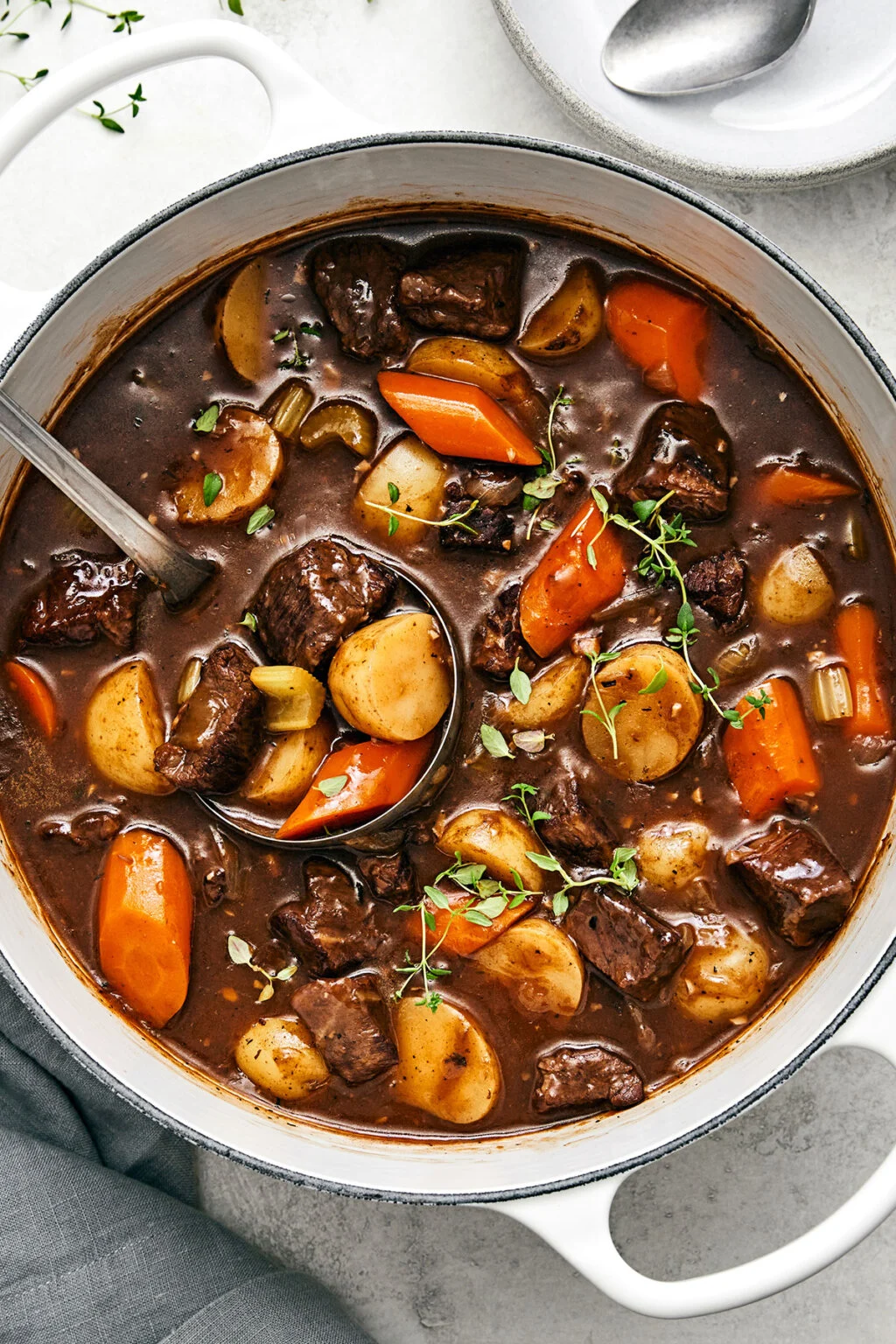
Have you ever walked into a kitchen and instantly felt at home just because of the smell? That’s exactly what happens when a pot of old-fashioned beef stew is simmering on the stove. It’s rich, warm, and deeply comforting—like a hug in a bowl.
I still remember the first time I made this stew on a cold evening. I had a few simple ingredients: beef, potatoes, carrots, and onions. I didn’t expect anything extraordinary, but as it slowly cooked, the flavors came together in a way that felt magical. By the time it was ready, the meat was tender, the broth was thick and savory, and I knew this recipe would stay with me forever.
If you’re looking for something cozy, filling, and simple to make, you’re going to love this classic beef stew. Let’s cook it together.
Recipe Origin & Story
Beef stew has been around for centuries and exists in many cultures around the world. Traditionally, it was a practical dish—people used tougher cuts of meat and cooked them slowly to make them tender and flavorful.
This old-fashioned version is inspired by home-style cooking, where simple ingredients are transformed into something hearty and satisfying. It’s the kind of meal that families gather around, especially during colder months.
For me, this dish feels like a reminder that good food doesn’t have to be complicated. Sometimes, all you need is time, patience, and a few quality ingredients.
Ingredient Spotlight
- Main Star: Beef chuck is the best choice for stew. It has enough fat and connective tissue to become incredibly tender when cooked slowly.
- Secret Boost: A splash of tomato paste or a dash of Worcestershire sauce adds depth and richness to the broth.
-
Quality Tips:
Choose fresh vegetables with firm texture. For the beef, look for marbling—it means more flavor and tenderness after cooking.
Nutritional Benefits
This stew is not just comforting—it’s also nourishing.
Beef provides high-quality protein and iron, which helps support energy levels and overall health.
Carrots and potatoes bring vitamins, fiber, and natural sweetness, making the dish both balanced and satisfying.
Because everything is cooked together, the nutrients blend into the broth, making every spoonful rich and wholesome.
Adaptable Variations
-
Dietary Swaps:
For a lighter version, use lean beef or substitute with chicken. You can also reduce potatoes and add more vegetables for a lower-carb option. -
Flavor Twists:
Add mushrooms, peas, or a bit of garlic for extra flavor. Fresh herbs like thyme or rosemary bring a beautiful aroma. -
Seasonal Spins:
In winter, keep it classic and hearty. In spring, lighten it with green vegetables like peas and beans.
Cooking Science Explained
Slow cooking is the secret to a perfect beef stew.
When you cook beef at a low temperature for a long time, the connective tissues break down into gelatin. This makes the meat tender and gives the broth a rich, silky texture.
Browning the beef before simmering is also important—it creates deep flavor through caramelization.
Finally, letting the stew rest for a few minutes after cooking helps the flavors settle and become even more delicious.
Easy, Step-by-Step Recipe
Ingredients
- 700 g (1.5 lb) beef chuck, cut into cubes
- 3 tablespoons flour
- 2 tablespoons oil
- 1 onion, chopped
- 3 carrots, sliced
- 3 potatoes, cubed
- 2 cloves garlic, minced
- 2 tablespoons tomato paste
- 4 cups beef broth
- 1 teaspoon salt
- 1/2 teaspoon black pepper
- 1 teaspoon thyme
- 1 bay leaf
- 1 tablespoon Worcestershire sauce (optional)
- 1 cup peas (optional)
Instructions
- Toss the beef cubes in flour, salt, and pepper.
- Heat oil in a large pot over medium-high heat. Brown the beef on all sides, then remove and set aside.
- In the same pot, cook the onion and garlic until soft and fragrant.
- Stir in tomato paste and cook for 1 minute. Add the beef back to the pot.
- Pour in beef broth, then add carrots, potatoes, thyme, bay leaf, and Worcestershire sauce.
- Bring to a boil, then reduce heat and let it simmer for 1.5 to 2 hours until the beef is tender.
- Add peas in the last 10 minutes if using. Adjust seasoning and serve warm.
Practical & Valuable Tips
- Storage: Store leftovers in the fridge for up to 4 days. The flavor gets even better the next day.
- Serving Ideas: Serve with crusty bread or rice to soak up the rich broth.
- Substitutions: If you don’t have beef broth, chicken broth can work, though the flavor will be lighter.
Make-Ahead & Batch-Cooking
Beef stew is perfect for making ahead. In fact, it often tastes better the next day because the flavors have more time to develop.
You can also freeze it in portions for up to 3 months. Just reheat gently on the stove when needed.
Eco-Friendly Kitchen Hacks
- Use vegetable scraps to make homemade broth.
- Cook a large batch to reduce energy use.
- Store leftovers properly to avoid food waste.
Pairing Suggestions
- Beverages: A warm tea, sparkling water, or a glass of red wine pairs beautifully with beef stew.
- Sides & Sauces: Crusty bread, mashed potatoes, or a simple green salad are perfect companions.
Frequently Asked Questions
-
Why is my beef tough?
It likely needs more cooking time. Slow cooking helps break down the fibers and make it tender. -
Can I make this in a slow cooker?
Yes! Cook on low for 6–8 hours or high for 4–5 hours. -
How do I thicken the stew?
You can mash some potatoes or add a small flour slurry. -
Can I skip browning the meat?
You can, but browning adds a lot of flavor, so it’s worth the extra step.
Call to Action
Now it’s your turn to make this old-fashioned beef stew and fill your kitchen with warmth and comfort. It’s simple, hearty, and perfect for sharing.
If you try it, I’d love to hear how it turned out. Did you add your own twist? Let’s share ideas and keep cooking together.
Bonus: Your Kitchen Notes
Use this space to write your own version—maybe you added mushrooms, changed the spices, or served it with something special.
Every bowl tells a story, and now this one is part of yours.